Sunflower seed processing is named directly as an application for both Pragya's seed cracker and cooker lines, and the seed's structure — a higher hull content than soybean — is what makes the cracking and cooking steps particularly important to get right.
Sunflower seed's hull content and why preparation matters
Sunflower seed carries a proportionally higher hull content than many other oilseeds, which is general industry knowledge about the crop rather than a claim specific to any one plant's yield numbers. That hull material has to be broken down effectively before flaking and extraction, or it ends up interfering with downstream processing quality — which is why the seed cracker step is a listed application-specific use case rather than a generic add-on.
Seed cracking for sunflower preparation
Pragya's seed crackers break whole seeds into 4–6 uniform pieces using counter-rotating corrugated rolls with a controlled speed differential (1:1.5 to 1:2.5 ratio), hardened to HRC 55–60. Sunflower and soybean seed cracking is listed as a direct application. Cracking reduces downstream flaking power consumption by 20–30% and — importantly for a higher-hull crop like sunflower — prevents oversized or hull-heavy seed pieces from damaging the flaker's rolls. Capacity across the seed cracker range runs 50–500 TPD. See the first step in oil seed processing for how gap and roll hardness are set.
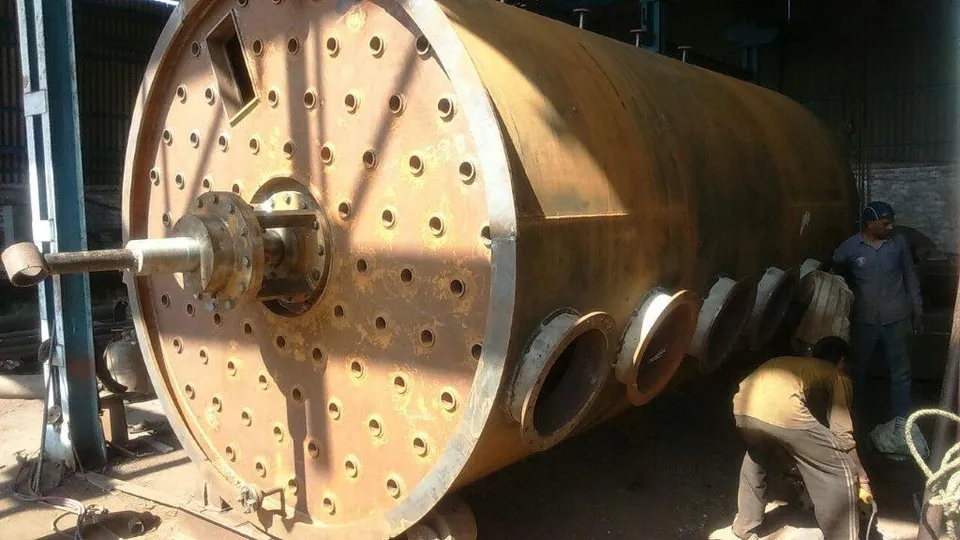
Cooking for thorough preparation
Sunflower, rapeseed, and cottonseed cooking is listed explicitly among the cooker's applications. Pragya's cookers use a multi-stage design (heating, cooking, tempering) running at 60–70°C with a 20–40 minute residence time, combining steam injection with indirect heating. The cooker's role is more intensive thermal treatment than standard conditioning provides — denaturing proteins, breaking down cell walls, and inactivating enzymes — which matters for seeds whose structure needs more preparation than a quick conditioning pass can deliver before flaking — how cooking improves oil yield covers the multi-stage design.
Building a sunflower processing line
A sunflower line built around Pragya's equipment typically runs seed cracker, then conditioner, then cooker, then flaker, in that order, with each step sized to the plant's target daily throughput (50–500 TPD across the range). The cracking and cooking stages carry more weight in a sunflower-specific line than they would in a lower-hull-content crop, simply because there's more seed structure to break down before the material is ready for efficient solvent extraction.
What to confirm when specifying equipment
Because sunflower's hull content places extra demand on the cracking and cooking stages specifically, it's worth confirming that both machines are specified with sunflower named explicitly among their intended applications, rather than assuming a cracker or cooker built primarily around soybean throughput will perform identically on a higher-hull crop. Roll hardness and gap adjustment range on the cracker, and residence time and temperature control on the cooker, are the specifications most worth checking against the plant's actual sunflower seed characteristics before finalizing an order. Where feedstock arrives in oversized clusters, breaker rolls sit ahead of the cracker.
Availability in India
Designed and built at Pragya's Pithampur (Indore) works and supplied to oil seed processing plants across India. Equipment is fabricated to the relevant IS standards, delivered by road to your plant, and installed and commissioned on site by our own engineers, who also train your operators.
Interested in our industrial equipment?
Our engineering team, based in Indore, Madhya Pradesh, India, will recommend the right solution for your plant requirements.
Request a quote