Rapeseed, canola, and mustard processing both appear directly in the applications lists for Pragya's conditioner and pre-press (squeezer) equipment, reflecting how these related brassica oilseeds are typically handled through a pre-press-then-extract route rather than direct solvent extraction alone.
Conditioning rapeseed and mustard seed
Conditioners adjust incoming seed moisture — bringing it from an incoming 8–10% to a target 10–12% — and temperature (60–70°C) before flaking, making the seed pliable enough for efficient processing. Rapeseed and mustard seed preparation is listed as a direct application. Getting this step right reduces flaking power consumption by 15–20% and improves flake quality and roll life, using direct steam injection combined with indirect heating over a 15–30 minute residence time. Capacity runs 50–500 TPD, in line with the rest of Pragya's solvent extraction range.
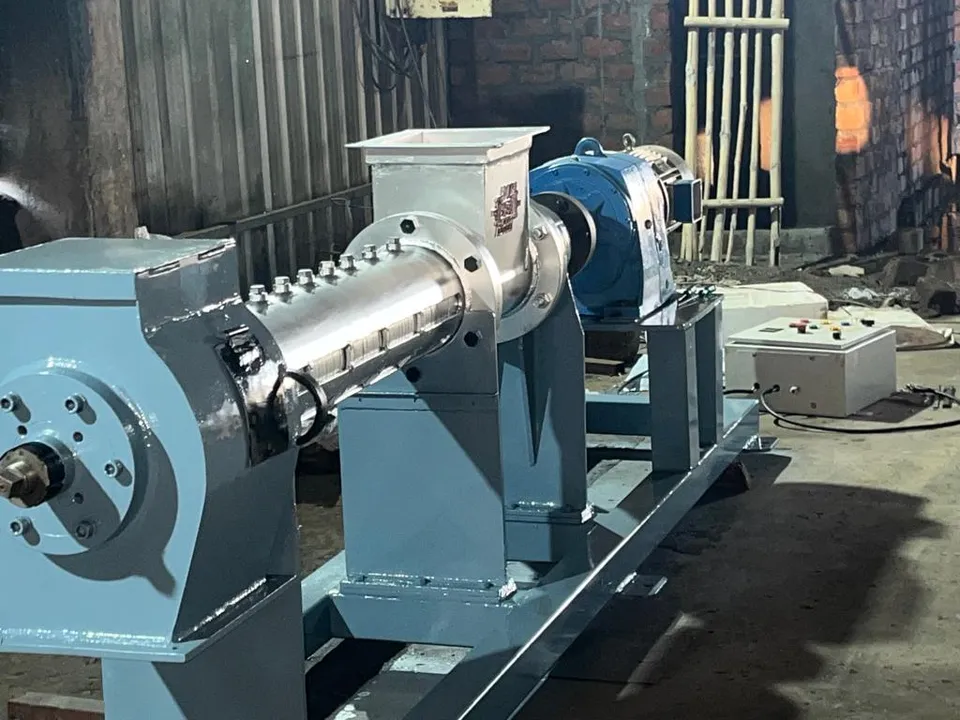
Pre-pressing before solvent extraction
Rapeseed and canola operations are listed explicitly as an application for Pragya's pre-press machine (also called a squeezer or expeller). This screw-press or hydraulic-press equipment mechanically extracts 60–70% of the available oil before the material goes to solvent extraction, leaving a cake with 12–18% residual oil for the solvent stage to finish. For seeds like rapeseed and mustard that carry a workable oil content for mechanical pre-pressing, this two-stage approach — mechanical press first, solvent extraction second — reduces the load on the solvent extraction stage compared with sending unpressed material straight through, and is a standard configuration rather than a specialty setup — our guide to reducing oil content before extraction covers the press itself.
Why the pre-press route fits these crops
The choice between pre-press-then-extract and direct solvent extraction generally comes down to the feedstock's oil content and what the plant's downstream extraction capacity is sized for. Rapeseed, canola, and mustard are the specific crops Pragya's product pages name for the pre-press equipment, indicating this is the established route for this seed group in Pragya's design experience. A plant processing these crops should plan for both the conditioner and pre-press stages as standard equipment in the line rather than treating the pre-press step as optional.
Line sequencing
For rapeseed and mustard processing, the typical sequence is seed cracking, conditioning, flaking, and pre-pressing before the material reaches the solvent extraction stage proper. Each stage in Pragya's range is built to the same 50–500 TPD capacity band, which lets a plant size the full line consistently around its target daily throughput rather than mixing equipment rated for different scales.
Availability in India
Designed and built at Pragya's Pithampur (Indore) works and supplied to oil seed processing plants across India. Equipment is fabricated to the relevant IS standards, delivered by road to your plant, and installed and commissioned on site by our own engineers, who also train your operators.
Interested in our industrial equipment?
Our engineering team, based in Indore, Madhya Pradesh, India, will recommend the right solution for your plant requirements.
Request a quote