Rice bran differs from seed-based oilseeds in that it's a milling byproduct rather than a whole seed, which changes how it needs to be handled through expansion and, afterward, cooling.
Rice bran as a processing feedstock
Rice bran arrives at a solvent extraction plant already in a fine, loose form rather than as a whole seed needing cracking and flaking — it's a byproduct of rice milling. That structural difference is why the expansion and post-extraction cooling stages carry particular weight in a rice bran line, since the material still needs to be brought to the right bulk density and physical form for efficient solvent extraction despite skipping the seed-preparation steps that soybean or sunflower processing require.
Expansion for rice bran
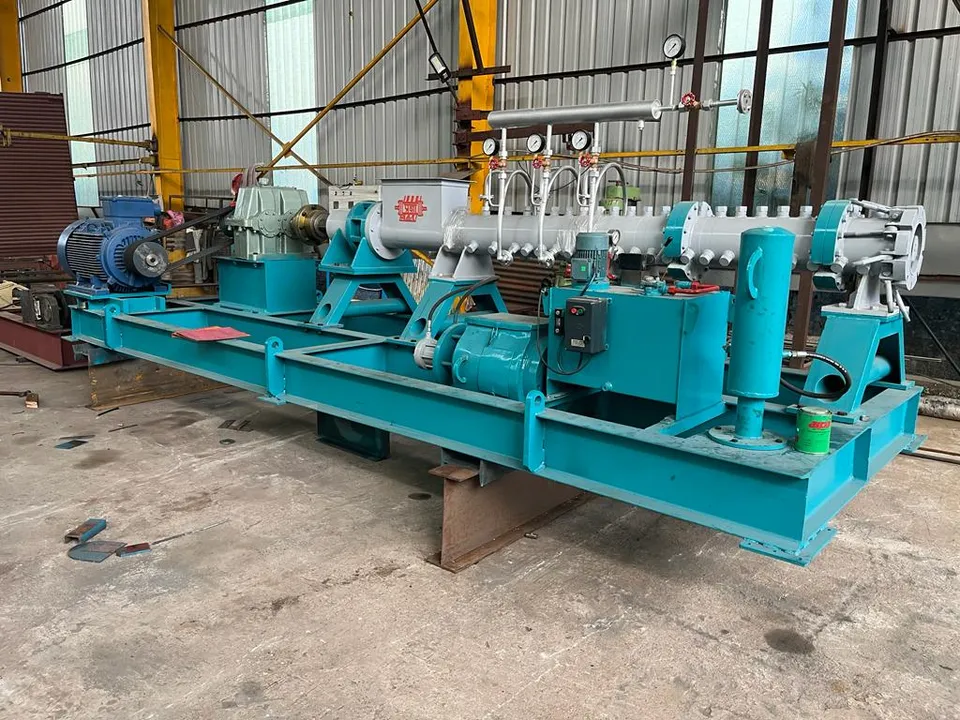
Pragya's expander/extruder line transforms conditioned material into porous pellets, increasing bulk density by 40–50% (from roughly 0.4–0.5 kg/L to 0.6–0.7 kg/L) and improving extractability. For a fine, loose material like rice bran, this densification step is what makes the material practical to run through an extraction column at reasonable throughput — loose bran without expansion would pack poorly and extract unevenly. The expander also reduces solvent consumption by 15–25% relative to unexpanded material, running across the same 50–500 TPD capacity band as the rest of Pragya's solvent extraction equipment. On terminology, see expander vs extruder.
Drier coolers for post-extraction handling
After extraction, meal exits at high temperature — Pragya's drier coolers bring material down from 100–110°C to approximately 40°C and reduce moisture to a 10–12% final level, using counter-current or cross-flow air systems. This step is where rice bran processing has a genuine practical consideration: rice bran meal that isn't cooled and stabilized promptly after extraction is more prone to quality degradation than more stable meal types, which is a widely recognized characteristic of rice bran generally rather than a specific number pulled from any single plant's data. Getting the drier cooler stage sized correctly for the plant's throughput is what prevents extracted material from sitting too long at high temperature and moisture before it reaches a stable, storable state — our guide to drier cooler function and design covers airflow configuration and sizing.
Line considerations for rice bran
A rice bran processing line built around Pragya's equipment typically leans more heavily on the expander for material preparation and on drier cooler capacity for fast post-extraction stabilization, compared with a whole-seed line that spreads preparation work across cracking, conditioning, cooking, and flaking stages. Confirming that drier cooler throughput matches the extraction stage's output rate — not just the plant's average daily volume — is the detail most worth checking when specifying equipment for rice bran specifically. Bring your throughput target to our engineering team before sizing the line.
Availability in India
Designed and built at Pragya's Pithampur (Indore) works and supplied to oil seed processing plants across India. Equipment is fabricated to the relevant IS standards, delivered by road to your plant, and installed and commissioned on site by our own engineers, who also train your operators.
Interested in our industrial equipment?
Our engineering team, based in Indore, Madhya Pradesh, India, will recommend the right solution for your plant requirements.
Request a quote