Soybean is the single most common feedstock for solvent extraction plants worldwide, and the flaking and expansion steps are where most of the extraction efficiency for soy gets decided.
Why soybean processing centres on flaking and expansion
Soybean flaking is explicitly listed as a primary application for Pragya's flaker machines, and soybean oil extraction plants are named as an application for the expander/extruder line as well. These two machines sit back-to-back in the process: the flaker turns prepared seed into thin flakes, and the expander turns those flakes (after conditioning and cooking) into a porous, extraction-ready structure.
Flaking soybean for extraction
Pragya's flaker machines produce flakes at 0.25–0.35mm thickness using precision-ground rolls hardened to HRC 60–65, with hydraulic gap control for repeatable adjustment. Flaking increases seed surface area by 10–15× compared to cracked seed, which is the mechanism that actually drives extraction efficiency — solvent needs surface contact with the oil-bearing material, and thinner, more uniform flakes give it more of that contact per tonne processed. Roll sizes run from 600×1200mm up to 800×1500mm, with custom sizes available, and capacity ranges from 50–500 TPD. Minimizing fines (kept under 5%) matters specifically for soybean processing because fines can channel through the extraction column unevenly, reducing overall extraction efficiency — our flaker machine guide covers roll hardness and fines control in depth.
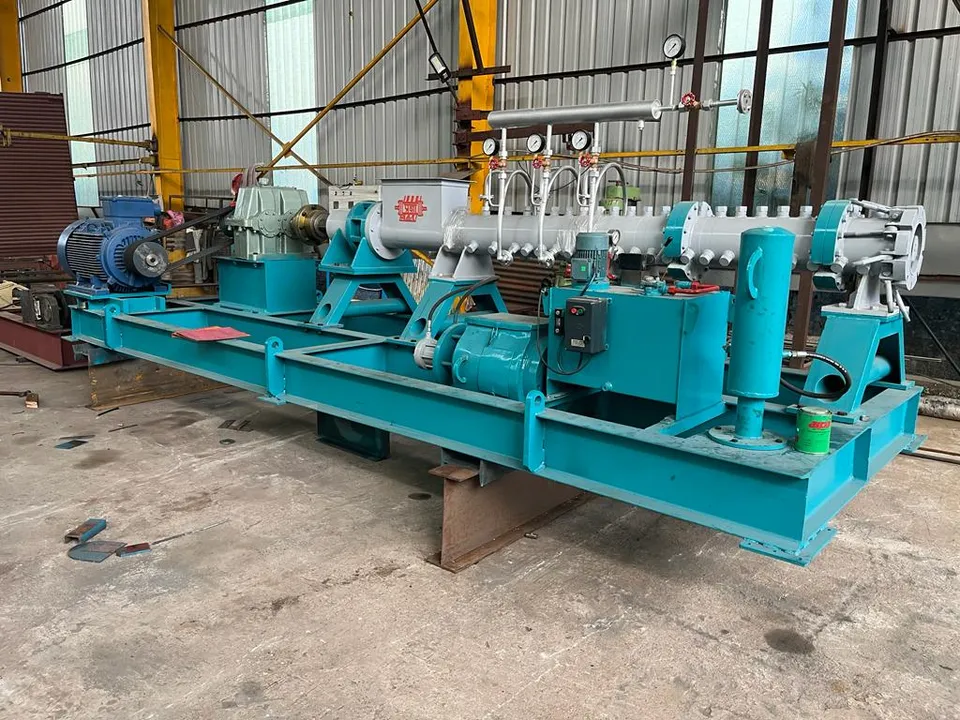
Expanding soybean flakes before extraction
After flaking, conditioning, and cooking, soybean material typically passes through an expander, which transforms it into porous pellets. This increases bulk density by 40–50% (from roughly 0.4–0.5 kg/L to 0.6–0.7 kg/L), which translates directly into higher extraction column throughput for the same physical footprint. The expansion process also reduces solvent consumption by 15–25% and improves meal quality and protein solubility — relevant for soybean specifically since soy meal's protein content is a significant part of its commercial value alongside the extracted oil. On terminology, see expander vs extruder.
Sizing for a soybean plant
Both the flaker and expander in Pragya's range are built across a 50–500 TPD capacity band, which covers everything from a modest regional plant to a large-scale soybean crushing operation. Because soybean is processed at higher volumes globally than most other oilseeds, plant designers should confirm that both roll sizing on the flaker and pellet handling capacity on the expander are matched to the plant's target daily throughput, not just its nameplate capacity on paper — undersized flaking capacity in particular becomes the bottleneck that limits the whole line regardless of how much expansion or extraction capacity follows it.
Availability in India
Designed and built at Pragya's Pithampur (Indore) works and supplied to oil seed processing plants across India. Equipment is fabricated to the relevant IS standards, delivered by road to your plant, and installed and commissioned on site by our own engineers, who also train your operators.
Interested in our industrial equipment?
Our engineering team, based in Indore, Madhya Pradesh, India, will recommend the right solution for your plant requirements.
Request a quote