Plan a new solvent extraction plant around the full process sequence — seed cracker, conditioner or cooker, flaker, expander, and drier cooler — sized together for the same throughput target, since a mismatch at any one stage bottlenecks the whole line.
The process sequence and what each stage needs
- Seed cracker: breaks whole seeds into 4-6 uniform pieces using counter-rotating corrugated rolls, reducing downstream flaking power consumption by 20-30% and preventing roll damage from oversized seeds. Capacity range 50-500 TPD.
- Conditioner: adjusts seed moisture to 10-12% and temperature to 60-70°C before flaking, using direct steam injection plus indirect heating over a 15-30 minute residence time — this makes seeds pliable and cuts flaking power consumption by 15-20%.
- Cooker: provides more intensive multi-stage thermal treatment (20-40 minute residence, 60-70°C) than a standard conditioner, for seeds needing protein denaturation and cell wall breakdown before extraction.
- Flaker: produces uniform 0.25-0.35mm flakes, increasing seed surface area 10-15× using hardened rolls (HRC 60-65) with hydraulic gap control — flake thickness and consistency directly affect extraction efficiency.
- Expander: transforms flaked or conditioned seed into porous pellets, increasing bulk density 40-50% for higher extraction column throughput while reducing solvent consumption 15-25%.
- Drier cooler: reduces extracted meal temperature from 100-110°C down to roughly 40°C and moisture to 10-12% for safe storage, using counter-current or cross-flow air systems.
Planning checklist
- Set a single throughput target (TPD) and size every stage to it. All five process stages above list capacity ranges of 50-500 TPD — pick your target and confirm each machine is specified for that same number, not sized independently.
- Decide between conditioner and cooker based on your seed type. High-protein or hard-structured seeds typically need the more intensive cooker treatment; standard conditioning is sufficient for many other seed types. This choice affects downstream flaking and extraction performance.
- Confirm flake thickness matches your extraction method. Flake thickness (0.25-0.35mm) and consistency (less than 5% fines) directly affect how efficiently solvent penetrates the material in the extraction column.
- Check whether an expander is needed for your extraction column design. Bulk density increase from expansion (0.4-0.5 to 0.6-0.7 kg/L) matters more for some extraction column throughput requirements than others.
- Plan meal cooling capacity to match extraction output, not just average flow. Undersized drier cooler capacity creates a bottleneck at the very end of the line, after all upstream processing has already been paid for.
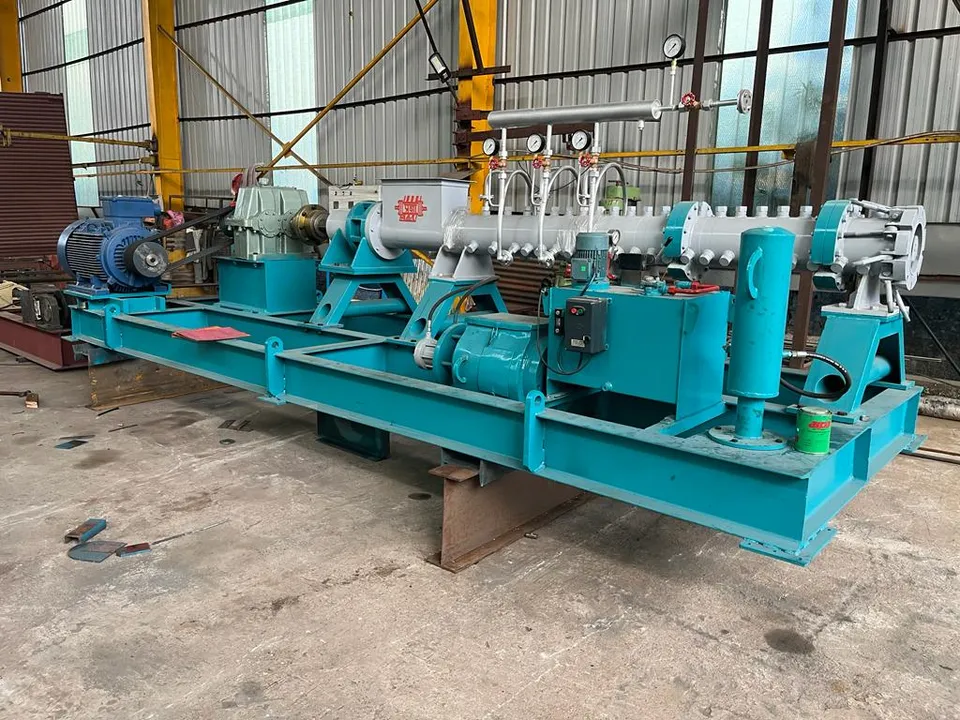
Why sequencing matters more than any single machine spec
Each stage's output becomes the next stage's input — cracked seed feeds the conditioner or cooker, conditioned seed feeds the flaker, and flaked material feeds the expander. A plant assembled from individually well-specified machines can still underperform if their outputs and inputs weren't matched during planning.
When to bring in an engineering team
Bring your seed type, target throughput, and site layout to a full-line engineering discussion before ordering individual machines. Pragya engineers the complete solvent extraction equipment line. Planning the sequence as one system, rather than sourcing each stage separately, is what determines whether the finished plant hits its throughput target from day one.
Availability in India
Designed and built at Pragya's Pithampur (Indore) works and supplied to oil seed processing plants across India. Equipment is fabricated to the relevant IS standards, delivered by road to your plant, and installed and commissioned on site by our own engineers, who also train your operators.
Interested in our industrial equipment?
Our engineering team, based in Indore, Madhya Pradesh, India, will recommend the right solution for your plant requirements.
Request a quote