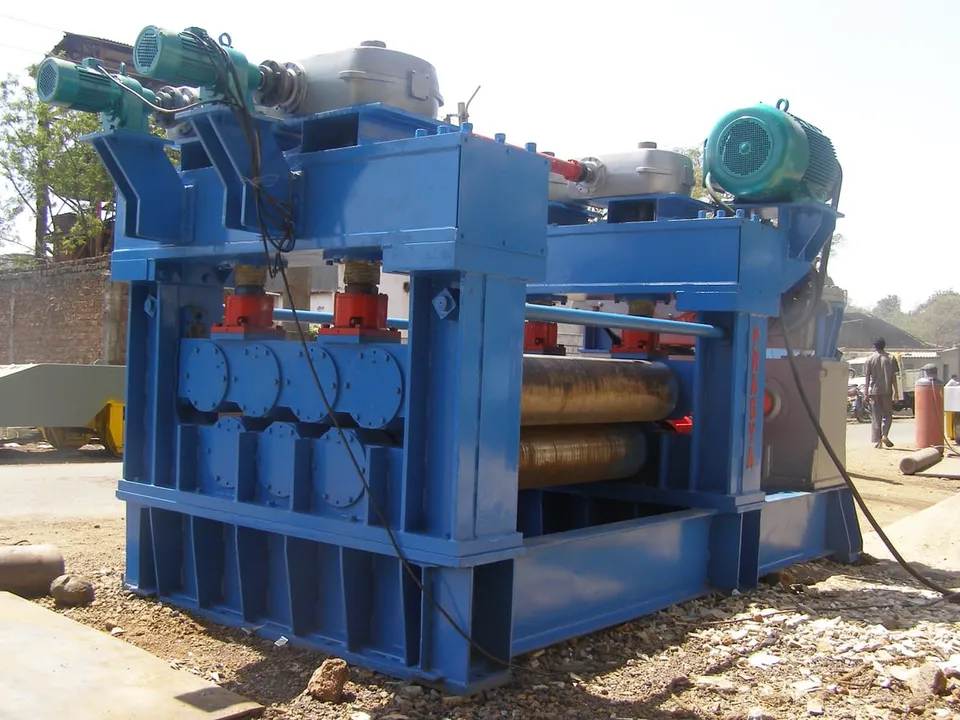
180 Degree Mechanical Plate Tilter
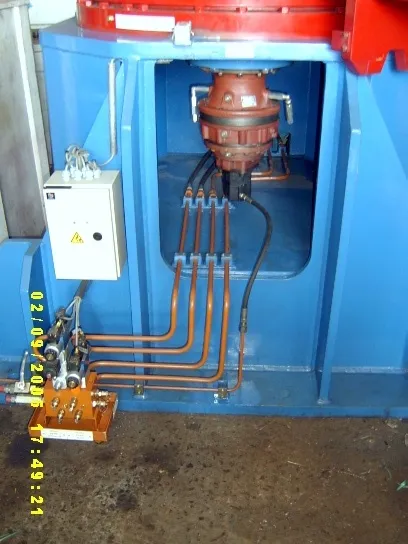
Photographs and video coming soon
Shop photographs and a video of a full turnover cycle are being prepared and will be published here shortly. For general arrangement drawings or reference photographs of a comparable build in the meantime, get in touch or call +91 91091 02280.
A 180 degree plate tilter turns a steel plate completely over — the face that was underneath comes up, and the plate is set back down flat, ready for the second side to be inspected, welded, ground or painted.
The drive is mechanical rather than hydraulic: a crank-rocker linkage or gear train carries the plate positively through the arc, so there is no power pack, no hoses and no oil near a surface about to be welded or painted. Also sold as a plate turnover device, plate upender or, where the workpiece is a cast slab, a slab tilting machine.
Every 180 Degree Mechanical Plate Tilter is engineered to your process at our Pithampur works near Indore and supplied to plants across India. Capacity, stroke, opening and control scheme are fixed against your material and your cycle time before fabrication begins, and the machine is trial run at the works before despatch.
- Capacity
- Rated to your maximum plate weight, to 70 ton
- Drive
- Mechanical — geared motor with crank-rocker linkage, no hydraulics
- Cycle Time
- Typically under a minute per turnover, geared to duty
- Built and supplied
- Made at Pithampur, Indore — delivered across India
Configurations
- Floor-mounted tilter: Stands on the shop floor, loaded by crane or fork truck
- Pit-mounted tilter: Table flush with the floor so plates can be slid on and off without a lift
- In-line tilter: Sits between conveyor sections in a plate processing or slab conditioning line
- Arm-and-cradle turnover: A receiving arm and a lifting arm, roller-fitted, hand the plate between them through the arc — the arrangement used for heavy plate
- Clamped turnover: For thinner plate that would otherwise flex or slip during the turn
Specifications
Against the Alternatives
| 180° plate tilter | Crane and slings | Hydraulic upender | |
|---|---|---|---|
| People involved | One operator | Crane operator plus riggers | One operator |
| Crane tied up | No | Yes, for the whole flip | No |
| Cycle repeatability | Identical every time | Depends on the rigging crew | Good |
| Oil near the work | None | None | Hoses and power pack present |
| Stops at part angles | No — full turnover duty | Not controllably | Yes |
Where the tilt genuinely has to stop and hold partway, a hydraulic machine is the right answer and we build those too — tell us the duty and we will say which fits.
Key Features
- Positively driven crank-rocker or geared turn, with controlled start and stop at each end of the arc
- Rollered arms support the plate through the whole arc, so it does not flex, slip, or drop between stations
- Frees the overhead crane for production work instead of turnover duty
- Interlocks, emergency stop, and guarding around the rotating envelope
- One operator runs the cycle from a pendant
Applications
- Second-face welding on heavy fabrications and weldments
- Slab conditioning lines — grinding and scarfing the second face after inspection
- Both-sides descaling, shot blasting, and surface preparation
- Second-side painting and coating
- Underside inspection and NDT in plate mills
- Shipbuilding, bridge girder, and pressure vessel fabrication
- Turnover between passes in a plate processing line
Supply and Support in India
- Delivery: By road from Pithampur to site, assembled where the load permits and otherwise in sub-assemblies for erection at your plant.
- Installation: Foundation and utility drawings issued in advance; erection, alignment and commissioning carried out on site by our own engineers.
- Training: Operators and maintenance staff trained on the machine at handover, with the maintenance schedule handed over in writing.
- Power supply: Built for 415 V, 3-phase, 50 Hz, with electricals and hydraulics from brands supported across India.
- Service and spares: Serviced from Indore, with wear parts and seal kits available without waiting on an import.
Frequently Asked Questions
How is a 180 degree plate tilter different from a coil tilter?
A coil tilter rotates a coil through 90 degrees, between eye-up and eye-out. A 180 degree plate tilter turns a flat plate completely over, so the underside becomes the top face — what you need before inspecting, welding, grinding or painting the second side. The plate leaves the machine flat, the other way up, not on edge.
What else is this machine called?
Plate turnover device or machine, plate upender, plate flipping machine — and, where the workpiece is a cast slab rather than a rolled plate, slab tilting machine or slab turnover device. All describe the same duty: rotating a flat workpiece through 180 degrees so the second face can be worked. We quote against any of those specifications.
Why choose a mechanical tilter instead of a hydraulic one?
No power pack, no hoses, and no oil to leak onto a plate about to be painted or welded — in a fabrication or paint shop a contaminated surface means redoing the whole preparation. A crank-rocker linkage or gear train drives the turn positively, so the cycle repeats identically and holds position without fluid pressure, with less to maintain. Hydraulics still suit a tilt that must stop and hold at intermediate angles; a full-turnover duty usually does not.
What does it replace, and what does that save?
Conventional practice is to flip the plate with slings and an overhead crane, sometimes on a trunnion — slow, tying up a crane and a rigging team, and putting people near a swinging suspended load. On a line with automated welding it is also the step the machine waits on. A tilter makes it one cycle, run by one operator from a pendant, with the crane free for other work.
Is the plate tilter customised to my requirement?
Yes. Every machine we build is custom-engineered — plate length and width, plate thickness, weight, cycle time, mounting and loading method are all matched to your shop. Send your plate size range and throughput via the enquiry form or call +91 91091 02280 for a firm quote.
Do you install and commission the 180 Degree Mechanical Plate Tilter at our plant?
Yes. Foundation and utility drawings go out ahead of despatch, the machine travels by road from our Pithampur works near Indore, and our engineers erect, align and commission it on site and train your staff at handover.